In daily life spray products play a role in many routines from freshening spaces to applying personal care items. The way these products release their contents can make the difference between a quick success and repeated attempts to fix uneven results. Frustrations arise when the spray does not meet expectations leaving behind messes or requiring extra effort. Bluefire Aerosol Can Valve addresses these concerns with a design focused on enhanced performance.
The standard aerosol valve relies on basic mechanics for operation. The propellant forces the liquid mixture through a tube and out an opening in the actuator. This simple path means the breakup of the liquid depends entirely on the pressure and the properties of the mixture itself. As a result the spray can vary in quality depending on how full the can is or how it is held. Larger droplets may form and cause the product to run down surfaces rather than stay in place.
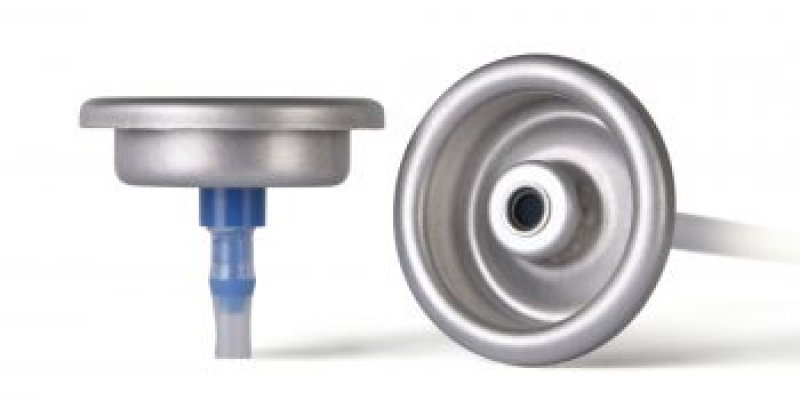
By contrast mechanical breakup introduces an extra layer of engineering within the valve. The liquid is directed through a series of small passages and obstacles that create mechanical forces. These forces shear the liquid into smaller segments and mix it more thoroughly with the propellant gas. The entire process happens inside the valve before the mixture reaches the outside air. This internal action ensures a more complete atomization without depending solely on external pressure.
The differences in spray quality stand out clearly when the two types are used side by side. Mechanical breakup delivers a mist that spreads in a balanced manner across the intended area. The particles are similar in size which allows for smooth and uniform deposition. Standard aerosol valves however can produce a spray with a mix of sizes that leads to patchy areas where too much or too little product lands. This inconsistency often requires the user to go over the surface multiple times to achieve the desired effect.
Particle characteristics further highlight the distinction. With mechanical breakup the resulting droplets are finer and tend to evaporate or absorb more quickly upon contact. This creates a drier feel and better integration with the target. Standard versions frequently release coarser particles that remain wet longer and may not adhere as well. The finer nature of the mechanical type supports more precise control over the amount applied in each press of the actuator.
Efficiency gains come as a natural outcome of these features. Because the spray is more directed and effective the product inside the can goes further toward completing the task at hand. Less material is lost to overspray or drift away from the surface. Standard aerosol valves do not always offer the same level of control which can lead to higher consumption rates for the same job.
The overall experience for the user improves with the mechanical breakup option. The spray feels lighter and more manageable reducing the physical effort needed to direct it accurately. There is less need to compensate for poor patterns by changing the distance or angle repeatedly. This reliability builds trust in the product and encourages regular use without hesitation.
Such valves prove useful in a wide range of situations. Individuals handling home maintenance tasks appreciate the even application that prevents streaks and bare spots. Those focused on personal care routines value the gentle mist that distributes evenly without heavy buildup. The versatility allows the same valve type to work well across different product viscosities and purposes.
As lifestyles emphasize convenience and effectiveness the choice of valve becomes an important factor in product selection. Mechanical breakup aligns with these priorities by delivering dependable results time after time. It transforms an ordinary spray into one that performs with greater precision and satisfaction.
The mechanical aspects also allow for better handling of challenging formulas. Products that are thicker in nature receive the extra assistance needed to break down properly for spraying. This prevents issues like sputtering or incomplete release that can occur with standard designs. The result is a more seamless interaction between the can and the user.
Sensory elements add to the appeal of mechanical breakup. The sound of the spray is often softer and the impact on the surface feels less abrupt. These subtle qualities contribute to a more positive interaction with the product. Standard valves may come across as harsher in both sound and feel due to the less refined delivery.
Many people have found that switching to mechanical breakup reduces the occurrence of common problems such as clogging after storage or inconsistent flow near the end of the can. The design maintains performance throughout the life of the product. This durability adds to the value perceived by the consumer.
The real differences between mechanical breakup and standard aerosol valves revolve around the level of control the quality of the mist and the efficiency of delivery. These elements combine to create a more satisfying user experience in numerous applications. By focusing on these aspects manufacturers can offer solutions that meet expectations for performance in spray products. Whether looking for reliable spray performance in favorite products the options available through mechanical breakup technology deserve attention. Visit https://www.bluefirecans.com/ .